


Risaia del Duca: Where Smart Farming, Research and Innovation Become Reality
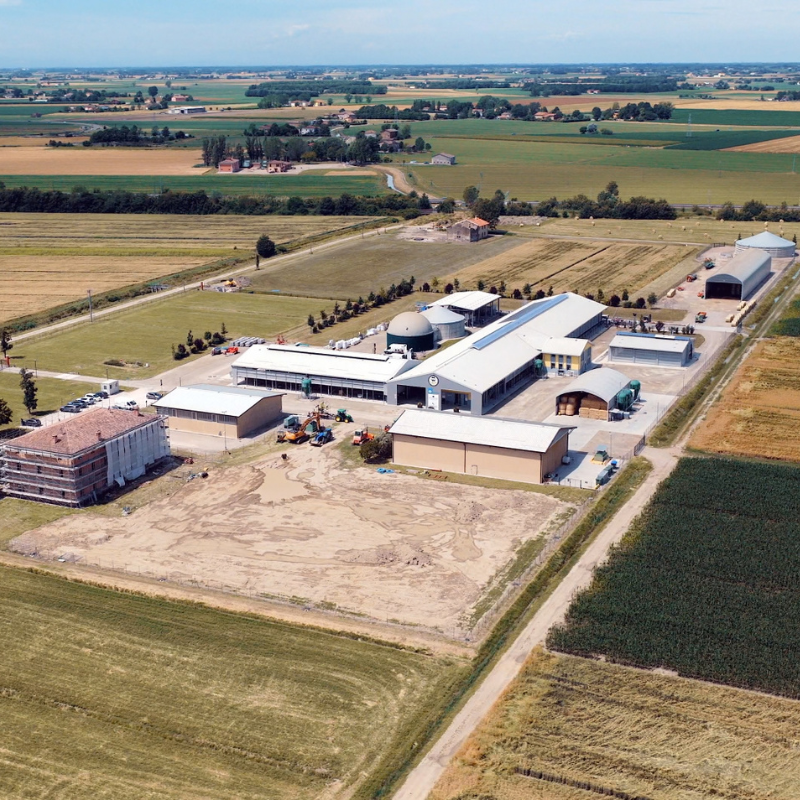
Agricultural innovation creates value when it is tested and proven in real operating conditions.
This is the philosophy behind Risaia del Duca, the smart farm located in San Felice sul Panaro, in the province of Modena, Italy. Supported by WAMGROUP, it has been designed as an ecosystem where agriculture, livestock farming, sustainability, scientific research and education coexist and reinforce one another.
More than a conventional farm, Risaia del Duca represents an advanced agro-livestock business model created to demonstrate how economic growth, environmental responsibility, technological innovation and skills development can move forward together.
For SAVECO, WAMGROUP's Business Unit specialising in technologies for wastewater treatment, livestock effluent management and environmental processes, Risaia del Duca plays a strategic role. It provides a real operating environment where technologies, processes and solutions for the livestock and biogas sectors can be observed, validated and refined under the conditions for which they were designed.
Risaia del Duca at a Glance
- Smart farm located in San Felice sul Panaro (Modena, Italy)
- Agro-livestock business model based on circular economy principles
- Milk production for the Parmigiano Reggiano supply chain
- Benefit Corporation since 2023
- Collaborations with the University of Bologna and the University of Ferrara
- Centre for applied agricultural and livestock innovation
- Test facility for SAVECO technologies dedicated to digestate and livestock effluent treatment
- Academy focused on education and knowledge transfer
A Smart Farm Built Around the Circular Economy
At Risaia del Duca, the circular economy is not a theoretical concept. It is the principle that drives the entire production model.
The farm produces milk for the Parmigiano Reggiano supply chain, grows forage crops for its dairy herd and cultivates cereals for the market, while adopting practices aimed at protecting natural resources and reducing environmental impact.
Within this framework, agricultural and livestock by-products are not regarded as waste, but as valuable resources that can be recovered through nutrient recycling, agronomic reuse and renewable energy production.
One of the most significant examples of this approach is the management of livestock effluent and digestate, both of which are essential for creating a truly sustainable agricultural system.
The Role of SAVECO Technologies in Digestate Valorisation
The collaboration with SAVECO is particularly relevant in the field of digestate treatment.
Risaia del Duca operates a treatment line incorporating SEPCOM technologies for solid-liquid separation, production of material suitable for bedding, thickening and microfiltration processes.
The objective is to transform digestate from a by-product into a resource, recovering value from its different fractions and promoting its reuse within the agricultural operation.
These applications provide a practical demonstration of how wastewater and livestock effluent treatment technologies can improve process efficiency, resource recovery and the overall sustainability of agro-livestock activities.
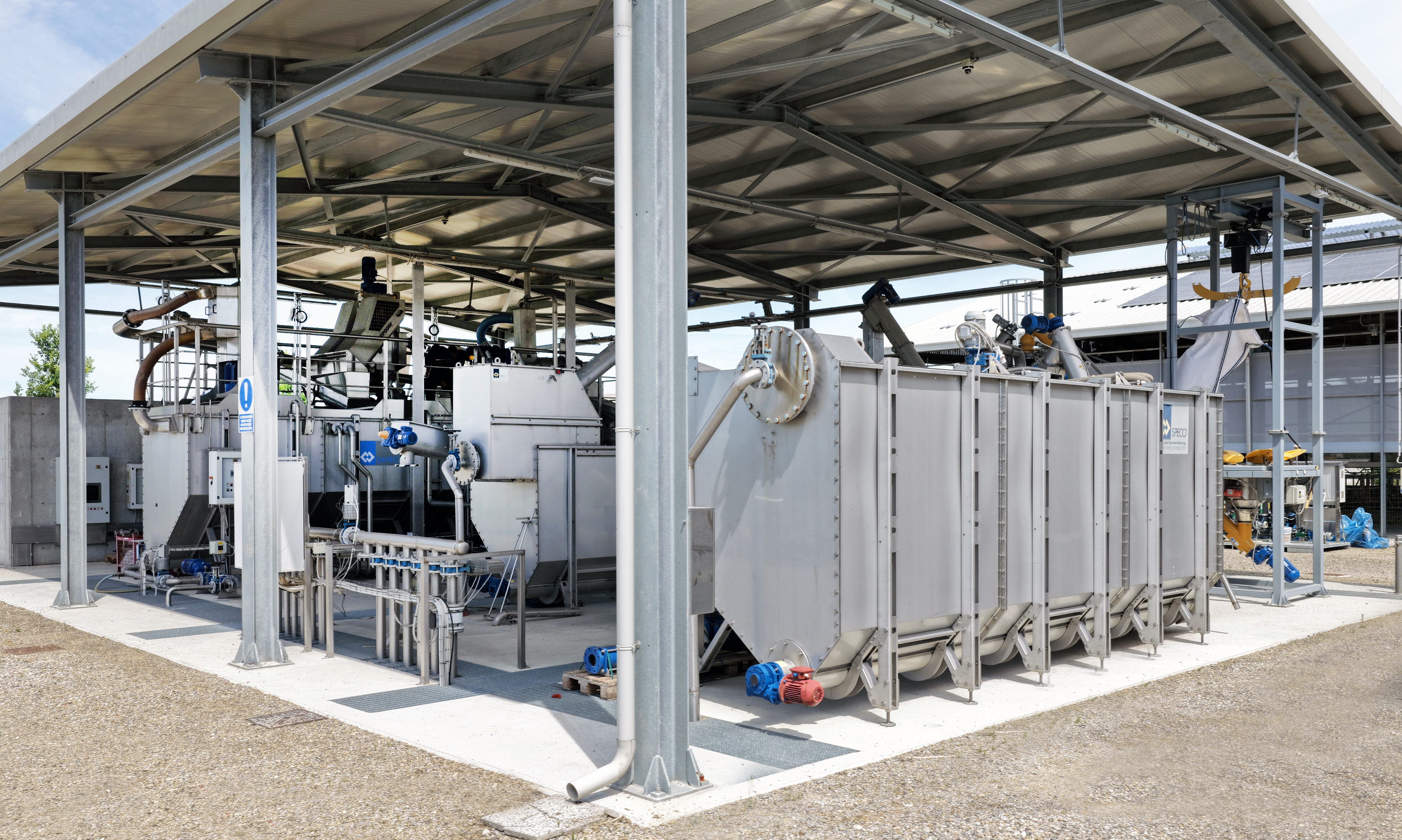
For SAVECO, Risaia del Duca is therefore far more than a production site. It is a genuine test facility, where technological innovation, experimentation and performance analysis come together on a daily basis.
Applied Research for the Agriculture of Tomorrow
Innovation also means measuring, verifying and continuously challenging existing knowledge.
For this reason, Risaia del Duca collaborates with universities, research institutes and technology partners in Italy and abroad on projects dedicated to sustainable agriculture, advanced livestock farming and the valorisation of agricultural resources.
One of the project's distinguishing features is the presence of experimental activities carried out directly on the farm, enabling research results to be transferred from the laboratory to real-world operating conditions.
Among the documented collaborations are those with the University of Bologna and the University of Ferrara, both focused on topics of strategic importance for the future of the sector.
Their activities have included:
- nitrogen recovery from livestock effluents;
- agronomic valorisation of nutrients;
- studies on the effects of animal-derived organic products on soil structure;
- analysis of soil resilience and fertility.
These projects make it possible to collect data, validate innovative approaches and deepen understanding of how technologies and agronomic practices can contribute to more efficient and sustainable production systems.
Research activities extend beyond agronomy.
Another key area of focus is animal welfare, an increasingly important topic within modern livestock farming. Documentation from Risaia del Duca reports research dedicated to the definition and monitoring of new calf welfare parameters, alongside the use of digital systems for monitoring herd conditions and the livestock environment.
As a result, scientific research, technology and production activities do not operate independently but become part of a single process of continuous improvement.
Animal Welfare and Data-Driven Management
Sustainability also depends on animal welfare.
For this reason, herd management integrates monitoring technologies, automated ventilation and cooling systems, and solutions designed to maintain suitable environmental and hygienic conditions.
This approach aims to use data and technology as decision-support tools, improving the day-to-day management of both animals and facilities.
Technology, research and continuous monitoring therefore contribute to creating better living conditions for livestock while supporting more efficient farm management.
People at the Heart of Innovation
Technological transformation creates value only when it is accompanied by the development of skills and expertise.
This is why training is one of the central pillars of the Risaia del Duca project.
A particularly significant aspect concerns the composition of the workforce: the majority of employees are women and people under the age of 35.
This reflects a commitment to investing in younger generations and fostering the renewal of skills needed to address the future challenges facing agriculture.
The farm's dedication to professional development is also reflected in its achievements. In 2023, it delivered 284 hours of technical, health and safety training, significantly exceeding its original target of 160 hours.
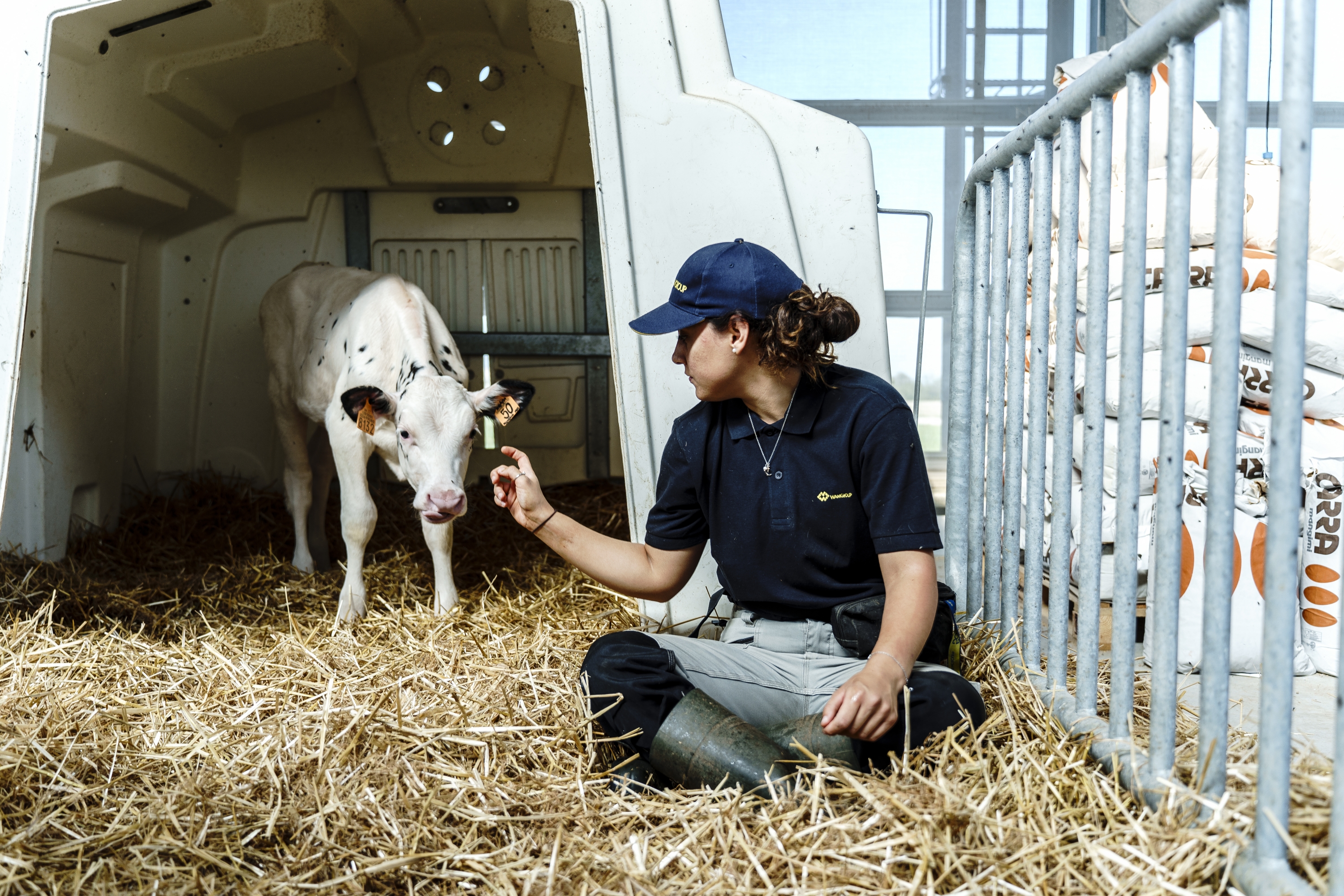
Academy: When a Smart Farm Becomes a Centre of Learning
Knowledge sharing is one of the cornerstones of the project.
Through its Academy initiative, Risaia del Duca aims to become a reference point for students, technicians, farmers, researchers and industry professionals.
The programme includes:
- technical field and dairy barn sessions;
- specialist training courses;
- internships and work placements;
- collaborations with agricultural colleges and universities in Italy and abroad;
- university and doctoral research programmes.
Plans also include dedicated student accommodation within the campus to host participants involved in educational activities.
The initiative builds upon a path that is already well underway. In 2023, seminars, workshops and technical-scientific events focusing on livestock effluent treatment, animal welfare and ammonia emission reduction attracted more than 160 participants.
The farm has also hosted meetings and educational activities for students, technicians, researchers and professionals, steadily strengthening its role as a centre for knowledge exchange, dissemination and innovation.
Sustainability as a Business Model
Since 2023, Risaia del Duca has been a Benefit Corporation.
This formalises a vision in which environmental stewardship, innovation, inclusion, education and economic development are all part of the same growth model.
Its commitment to soil quality, water management, emission reduction, renewable energy use and resource valorisation is combined with continuous investment in people and skills.
In this perspective, sustainability is not a goal separate from business operations. It is the principle that guides decision-making and shapes the company's future development.
An Open-Air Laboratory for the Future of Agriculture
For SAVECO, Risaia del Duca is a tangible example of how industrial innovation can work alongside the real needs of modern agriculture and livestock farming.
It is a place where technologies for livestock effluent and digestate management are tested under real operating conditions. Where scientific research meets practical application. Where students, universities, companies and professionals can collaborate to develop new skills and shape new production models.
In a sector challenged to produce more while using fewer resources, Risaia del Duca demonstrates that innovation, sustainability and human development are not competing objectives, but complementary parts of the same journey.


